August 31, 2026
Carl Jung on Psychosis
I recently came across Jung’s The Red Book for the first time, and I was fucking dumbfounded by how much of it reads like an account of psychosis. The voices, visions, figures, and intense sense of meaning felt strangely familiar. Of course, I guess we don’t actually know what Jung was experiencing clinically, but it only affirms to me how much the interpretation of an experience determines what we call it. He understood these experiences through a psychological and spiritual framework, while we might have understood the same experiences as symptoms.
It only makes sense that his approach to psychosis would be more compassionate. From what I understand, his approach wasn’t necessarily to take these experiences literally, but to recognize that the experience itself could still be meaningful. That is such an important distinction. There is something deeply humanizing about taking someone’s experience seriously without necessarily affirming the interpretation they’ve given it. It means you don’t have to reduce someone to their symptoms or simply ignore what they’re experiencing because it isn’t objectively true. That has not been my experience with clinicians.
That’s part of the problem with not talking about these experiences. Silence can make it feel like there is something about them that should be deeply shameful. For me, that silence only has piled more on to the internalized stigma. And, again, I think that’s part of why I feel so compelled to write this musical.
Mental Health Advocacy and Several Endings
I have rewritten the ending so many times that at some point I stopped being sure whether I was trying to find the right ending or one I could defend.
I keep thinking about how the story will be perceived, what people will take from it, what might be considered irresponsible, what needs to be softened or explained or made more palatable. But that’s not why I bother making anything. I keep reminding myself that I don’t have to compromise yet.
Part of what has made this so difficult is that I have very little interest in condemning the choices my characters make. There is an expectation, especially when writing about mental health, there needs ot be certain safeguards: if you depict a harmful belief, you have to make clear that you don’t endorse it; if you depict a destructive choice, you have to condemn it; if you let someone suffer, you have to carefully control what that suffering means. Everything has to be framed correctly. Everything has to be made safe.
I understand why. Psychotic illness already carries enough stigma, and I do wonder whether it’s responsible to put something into the world that could reinforce a harmful belief without explicitly dismantling it. But you can’t predict what will trigger anyone. Hell, I can’t always anticipate my own triggers. I’m not usually a fan of surreal films when they’re more aesthetically driven. I find them boring when the strangeness feels like the point rather than something I’m meant to care about. I need something underneath it that gives me a reason to stay invested. Occasionally I find some I actually like, but I don’t always get to enjoy them. I tried watching one in particular and couldn’t make it through thirty minutes without a panic attack. I thought I was relapsing cognitively. I’m very stubborn and I still can’t get through it. But movies like The Matrix or The Truman Show don’t bother me. But then a song plays that I forgot existed or some small trigger related to my own episode happens and I have to reorient. I can’t predict these things. I definitely can’t predict what could trigger any stranger. But I still am experimenting with sound a bit in some ways…I’m not sure if that would trigger anyone or induct new member by accident. It’s not particularly new
Either way, I’m going to have dramaturg and sensitivity readers go over it.
Sometimes it feels like we’re not writing musicals for adults. Adults can encounter a harmful belief without being told what to think about it. They can watch someone make a terrible choice and sit with the discomfort. They can distinguish between a character believing something and a work endorsing it.
I don’t want to write advocacy. I don’t want the story to provide the correct position on mental illness, recovery, or suffering. I want to trust the audience enough to let them be uncomfortable, disagree with me, and encounter something they don’t know what to do with.
Maybe that’s why I’ve struggled so much with the ending. I’m not only deciding what happens to the character; I’m deciding how much responsibility I have to tell the audience what that ending means.
And I don’t know if I want that responsibility.
I don’t think every story needs to tell us what to believe. Sometimes the more honest thing is to give people something they have to sit with.
August 14, 2026
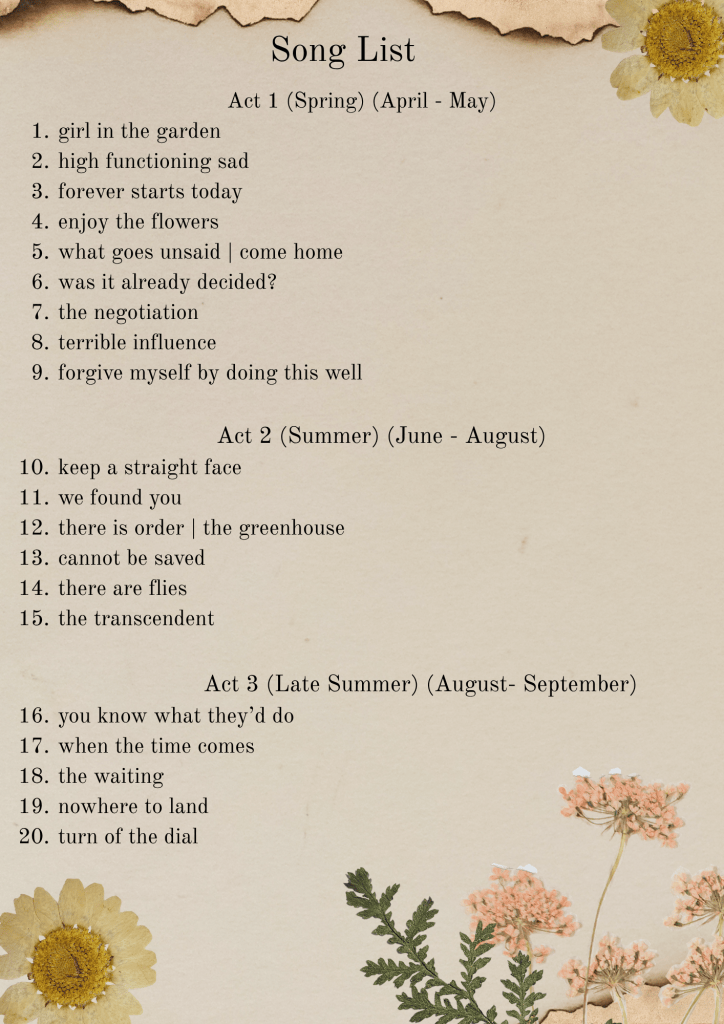
current titles and song order
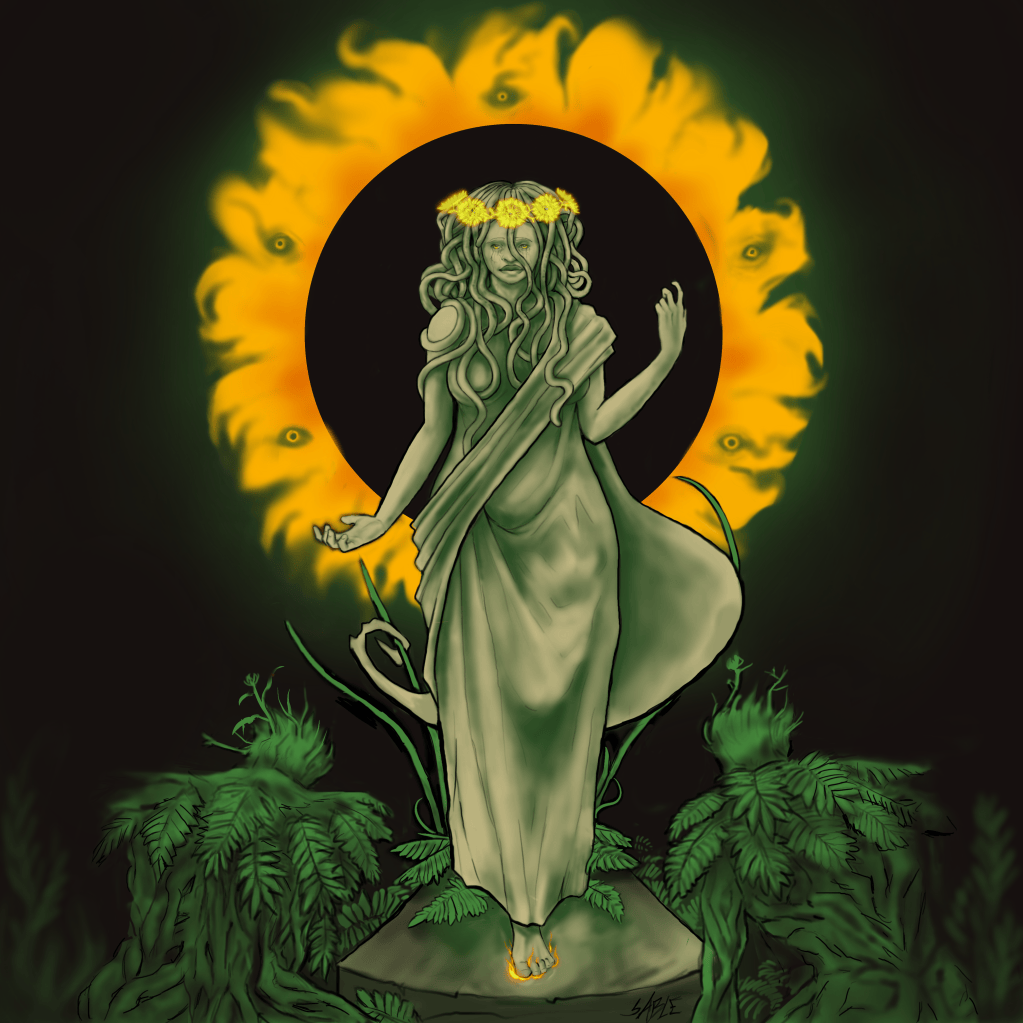
This is another version of the album art done by Keith Sable.
I can never stop looking at his work. You always find something new.
August 11, 2026
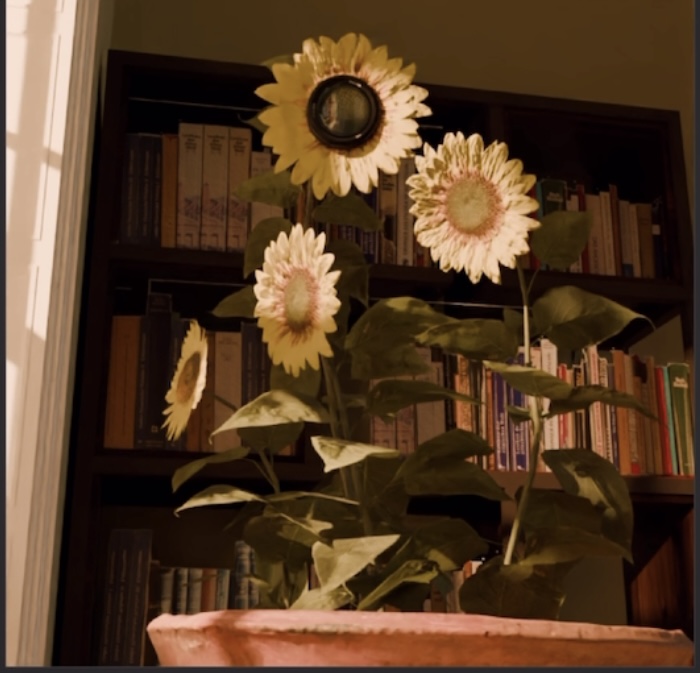
I had a friend help me come up with image just because I wanted some inspiration pictures that would give me the feeling I needed for the musical.
I started working on The Sunflowers Are Watching in 2023. At the time, it was a play.
For the past few years, most of my work on it has been focused on the book, the characters, and the world building and how I wanted to frame the story. I built a fictional cult with tenets and all that. I’m not even going to use the fictional name, I gave the cult I gave it, except maybe for in the book for the sake of clarity.
Eventually, I started working on another musical idea, which I’ll come back to after this one. But I kept coming back to this project. I wanted to write something rooted in a more personal experience, while also being very deliberate about making sure the story wasn’t autobiographical. I’ve never had anything to do with gardens, plants, or a garden center my entire life except that my mother love plants. I picked sunflowers because of their popularity to the point no one would care or even notice, and their interest lore across a lot of cultures. And I just think they’re cool. I’ve wanted to write about schizoaffective disorder for a long time, partly because I haven’t found many depictions of psychosis in musicals that I personally connected with.
Even though this is now a musical, I haven’t actually written the music until this week.
That feels a little strange. I’ve spent years writing the story and the lyrics without the music, which probably isn’t the most conventional way to write a musical. But I’m extremely text-first as a writer, so that’s where the project naturally went. I know the lyrics will absolutely change once I start working on them with music, that’s just the way it goes, but I’m trying to make this as painless as posible.
And now I’m finally getting to the fun part.I’m starting with the musical motifs, and I’m beginning in the middle of the show, then beginning and then ending in roughly that order. I always had an idea of how I wanted it to sound.
I’m starting these process notes now because I’m getting closer to finishing the first draft. I wanted to start keeping a record of how this thing actually comes together—not just the finished version, but the decisions, discoveries, problems, and weird little things that happen along the way.
I considered doing this through social media, but I don’t really want the pressure to keep sharing this early in the process. I’d rather keep it here on my website, where I can document the work and leave.
Mostly, I’m doing this for myself. I want to be able to look back someday, but if other people are interested, they can follow along.

